
“Do polar bears live in Antarctica?” No – and this ranks among the most common misconceptions we hear from passengers.
There are no bears on the White Continent. However, a remarkable variety of whales and seals do call Antarctica home, at least for a few months of the year.
Today, we take a closer look at the seal species that inhabit the ice and waters surrounding Antarctica.
Southern / Antarctic Fur Seal
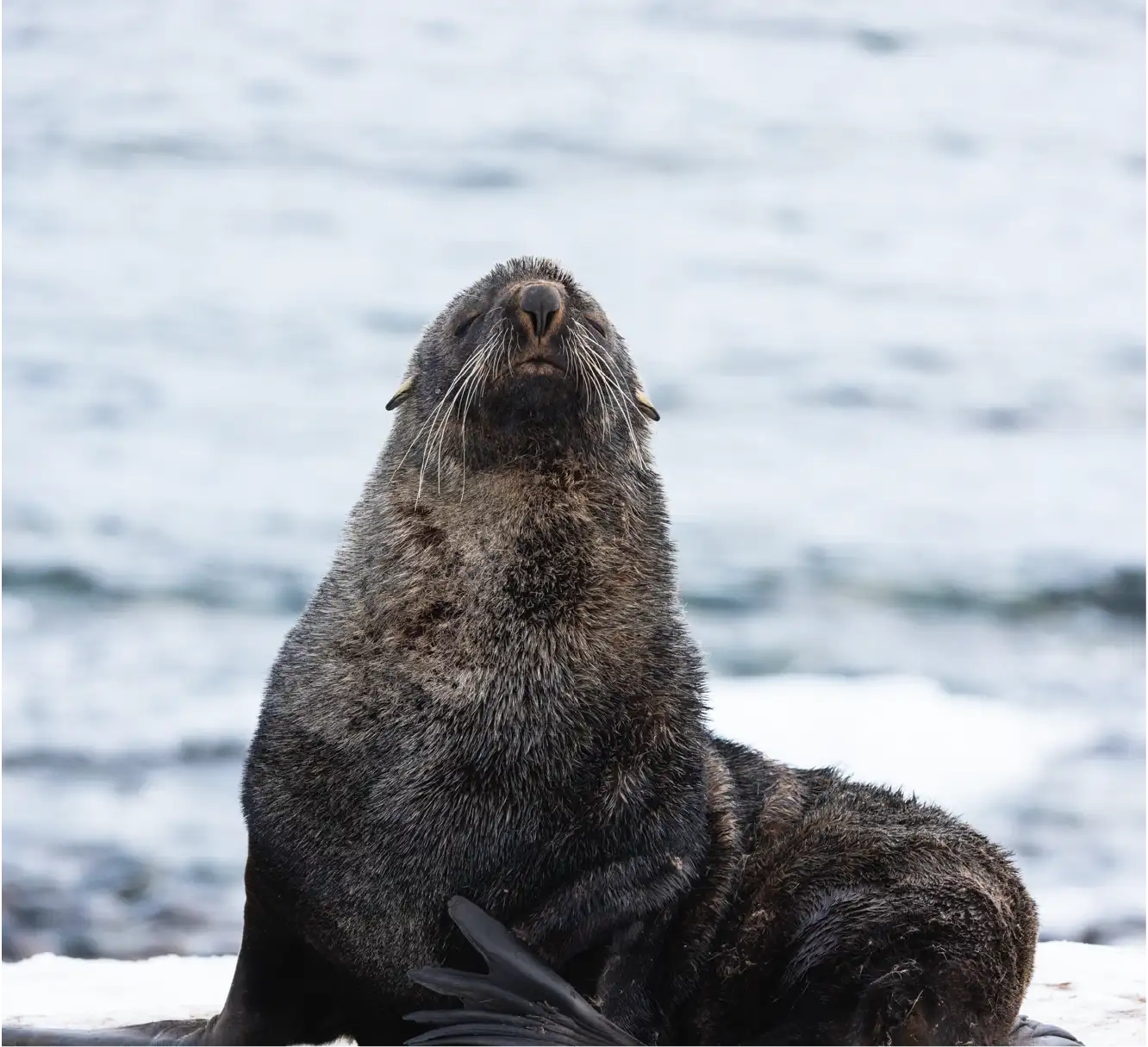
The Antarctic fur seal belongs to the “eared” seal family and resembles a large, oddly formed dog.
Because they have strong back flippers, fur seals move quickly and with surprising agility on land. Males can reach up to 200 kg – four times the size of females. During the 18th and 19th centuries, sealers nearly hunted them to extinction.
Fortunately, their population has since recovered, largely thanks to the Convention for the Conservation of Antarctic Seals. One thing to keep in mind: these seals can be aggressive and will charge at humans if they feel threatened.
- Estimated Population: 2-4 million
- Where they can be found: Sub-Antarctic Islands, largest breeding colony on South Georgia
Weddell Seal
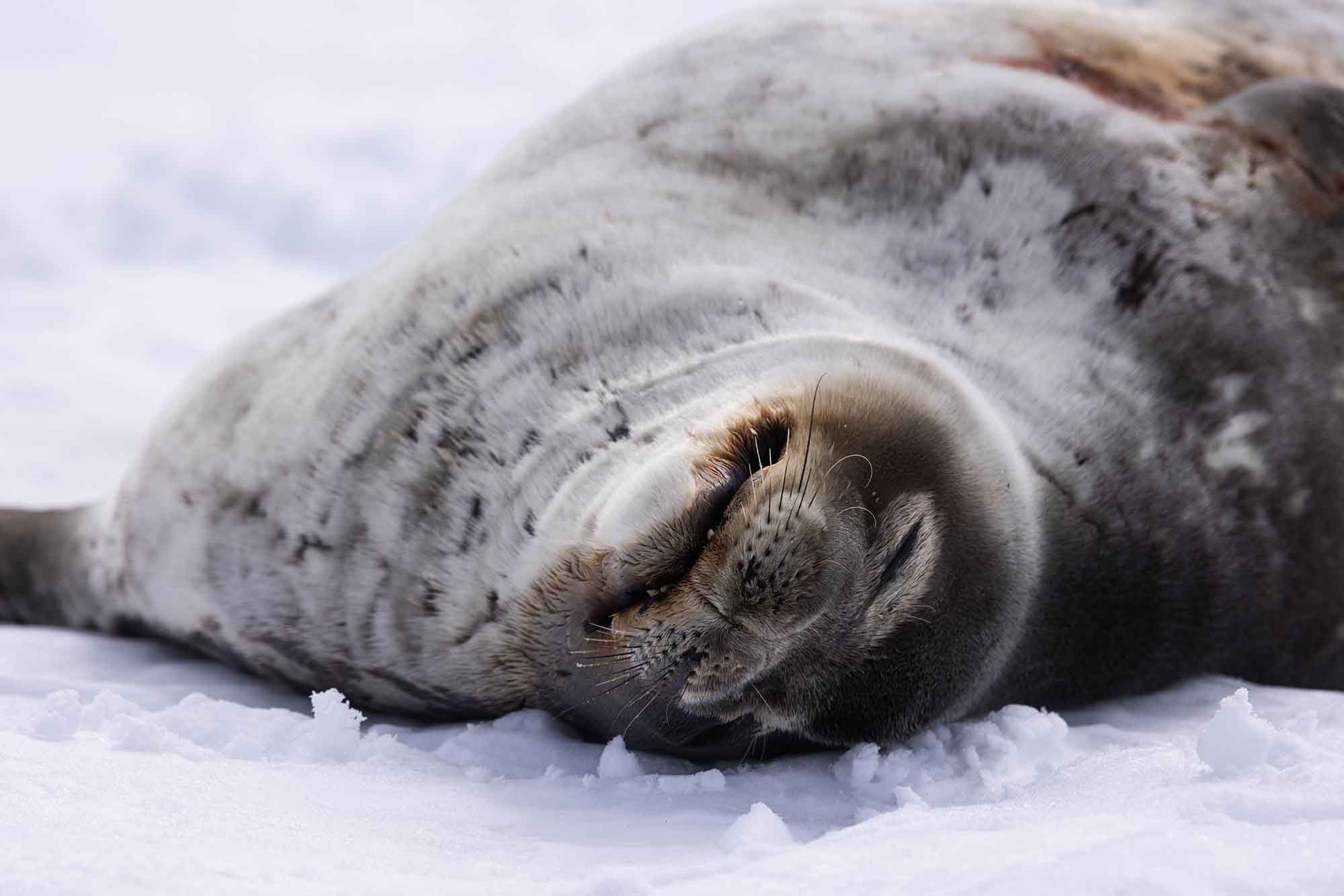
The Weddell seal holds the title of southernmost mammal on Earth and belongs to the “true seal” family.
These seals are remarkably sedentary. In fact, they spend most of their time resting on the ice around Antarctica, preferring broken pack ice so they can easily move between water and land.
Unlike many seal species, males and females are roughly the same size. They also stand out for their unusually large eyes, which help them see clearly in the dark Antarctic waters.
- Estimated population: 800,000 individuals
- Where they can be found: All over Antarctica, as far south as McMurdo Sound
Southern Elephant Seal
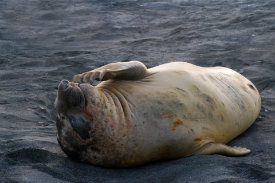
The southern elephant seal is the largest seal in the world. Males can reach an astonishing 4 tons in weight. As with the fur seal, females are roughly half the male’s size – so small that people often mistake them for pups.
So where does the name come from? These seals earn it on two counts: their enormous size and the distinctive trunk-like snout that males inflate to impress rivals and assert dominance during mating season.
- Estimated population: Unknown due to different breeding times and locations
- Where they can be found: Southern islands off the coasts of Argentina, South Africa & New Zealand; sub-Antarctic islands of South Georgia & the South Shetlands
Crabeater Seal
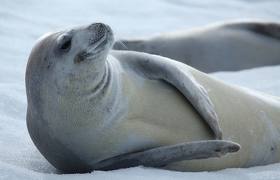
Despite its name, the crabeater seal does not eat crabs. In fact, it is the most abundant seal in the world and likely the second most populous large mammal on Earth, after humans.
Crabeaters live on the pack ice floes along the Antarctic coast and specialize in hunting Antarctic krill. Their sieve-like teeth filter krill directly from the water with remarkable efficiency.
They have slender bodies, long snouts, and coats that range from dark brown to blonde. Males and females are roughly the same size.
- Estimated Population: 15 million individuals (could be as high as 50 million)
- Where they can be found: Distributed throughout the coasts around Antarctica
Leopard Seal
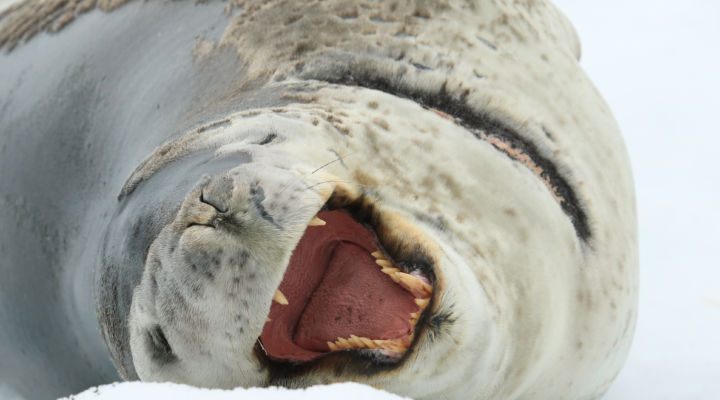
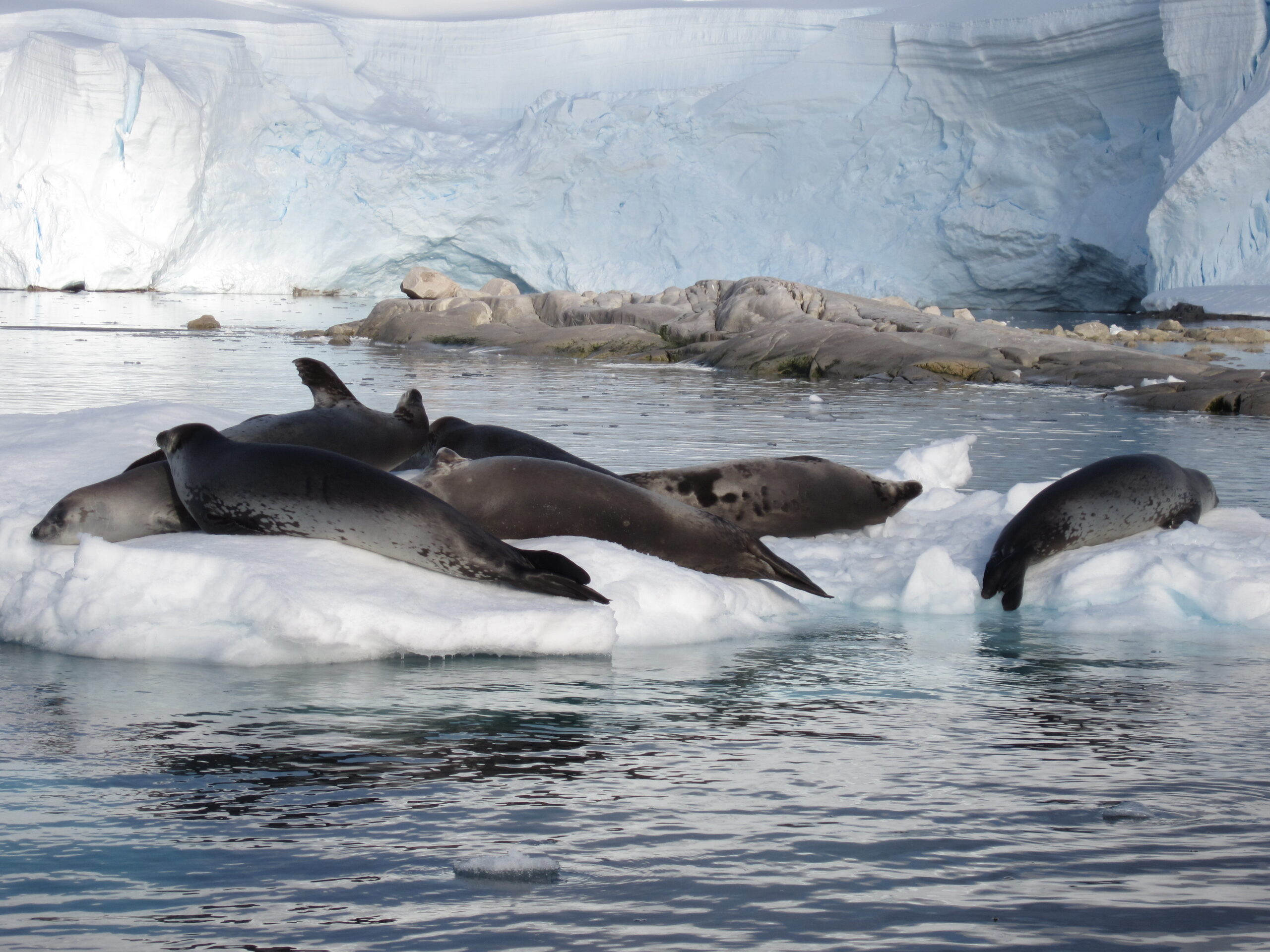
The leopard seal is one of Antarctica’s top predators and the second largest seal on the continent. Reaching up to 600 kg, these animals are impossible to miss.
They have large heads, and their mouths open wide to reveal sharply pointed molars. Leopard seals hunt Antarctic fur seals, penguins, and fish.
Unlike most seal species, they live a largely solitary life and only come together to mate. Bold and curious by nature, they can also be hostile toward humans – so Zodiac crews always keep a respectful distance.
- Where they can be found: Circumpolar distribution in the waters surrounding Antarctica
- Estimated population: up to 220,000 individuals
Together, these six seal species make Antarctica one of the richest wildlife destinations on the planet. Each has its own behavior, habitat, and personality – and every encounter feels genuinely surprising.
Whether you watch a Weddell seal dozing on the ice, spot a leopard seal gliding silently beneath your Zodiac, or stumble into a southern elephant seal colony in full chaos, these animals remind you just how alive this frozen continent really is.
If seeing Antarctic seals in the wild is on your list, our team at Freestyle Adventure Travel can help you find the right expedition and the right timing to make it happen. Get in touch with us — we have been planning Antarctic voyages from Ushuaia since 2013 and would love to help you plan yours.